

 English
 Russian
 Français
 Español
 اللغة العربية
 Japanese
 Korean
 German
 Tiếng Việt
 Italian
Hot Blog
-
Small Manual Hydraulic Lift Table Cart – Compact Hydraulic Lifting Solution for Material Handling
-
The Ultimate Guide to CD-K1 Aluminum Shell Electric Hoist: Power meets Efficiency
-
Ultimate Guide to KCD Heavy-Duty Wire Rope Electric Winches: Efficiency Redefine
-
Maximizing Safety in Hazardous Zones: The Complete Guide to Explosion-Proof Electric Wire Rope Lifting Cranes

Online consulting
If you have any questions, please contact our online customer service staff immediately
The Definitive Guide to Manual Permanent Magnet Lifters: Maximizing Efficiency and Safety in Steel Handling
 Click:1420
  Time:2026-01-21 15:53:19
In the fast-paced world of industrial manufacturing and steel fabrication, the ability to move heavy loads safely and efficiently is not just an advantage—it is a necessity. Among the various tools available, the Manual Permanent Magnet Lifter (often referred to as a Magnetic Crane or PML) has emerged as an indispensable asset.
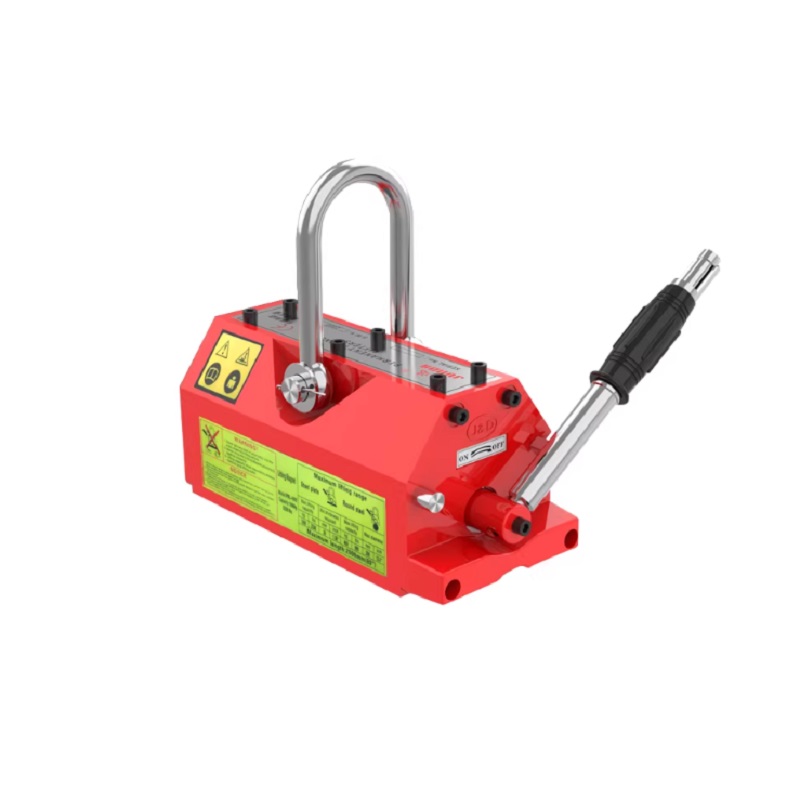 At Tieshou Lifting, we have spent years engineering lifting solutions that bridge the gap between raw power and operational safety. In this comprehensive guide, we will delve into the technical nuances of permanent magnetic lifters, the physics that drives them, and the E-E-A-T (Expertise, Experience, Authoritativeness, and Trustworthiness) standards you should look for when integrating these tools into your workflow.
1. The Science Behind the Strength: How It Works
A manual permanent magnet lifter operates on the principle of magnetic flux control. Unlike electromagnets, which require a constant power source, a PML utilizes high-energy Neodymium (NdFeB) magnets.
The device consists of two sets of magnets: a stationary outer block and a rotatable inner core. When the operator turns the handle to the "ON" position, the magnetic poles align, directing the magnetic flux through the base of the lifter and into the ferromagnetic material (like a steel plate). When switched "OFF," the magnetic circuit is internalized within the lifter's body, releasing the load.
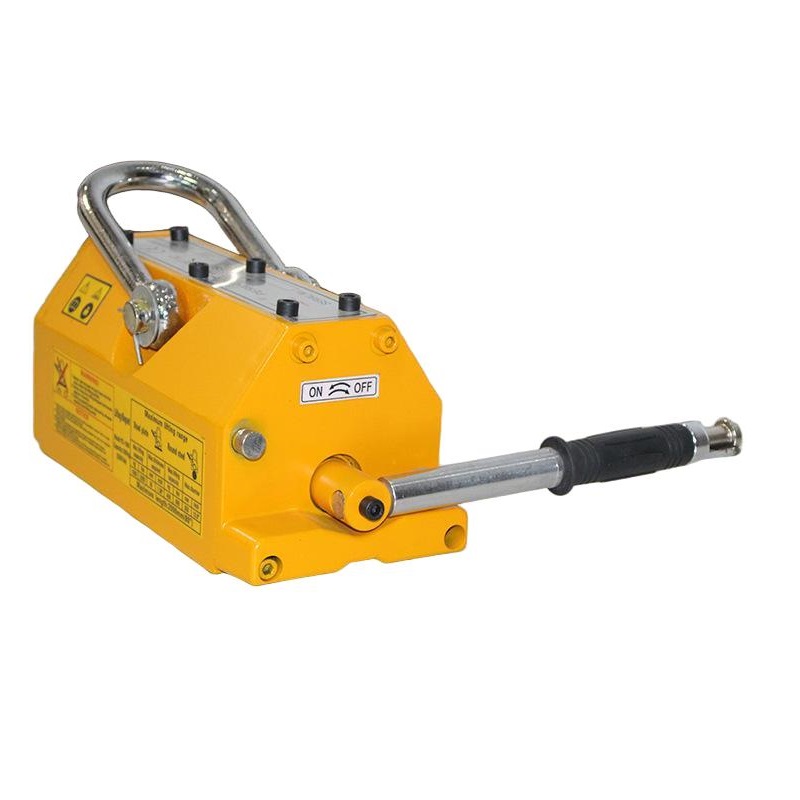 Expert Insight: The quality of the Neodymium used is critical. Tieshou’s lifters utilize N42 or higher grade magnets, ensuring that the magnetic force remains stable for decades without significant degradation, even in harsh industrial environments.
2. Why Choose Manual Magnetic Cranes?
For engineers and warehouse managers, the shift toward manual magnetic lifters is driven by several key benefits:
Zero Operational Costs: No electricity means no energy bills and no complex wiring.
Enhanced Safety: In the event of a power failure, a magnetic lifter will not drop its load, unlike an electromagnetic alternative.
V-Slot Versatility: Our Tieshou models feature a precision-machined V-slot on the bottom surface. This allows the lifter to secure both flat steel plates and cylindrical loads (pipes or round bars) with equal stability.
Durability: With no moving parts other than the internal core and handle, maintenance is minimal.
3. The Technical Expertise: Understanding Safety Factors
When evaluating a Magnetic Crane, the "Safety Factor" is the most critical metric for trustworthiness. While many budget options on the market claim high capacities, they often skimp on the safety margin.
At Tieshou Lifting, we adhere to a 3.5:1 Safety Factor. This means that a lifter rated for 1,000 kg has been tested to hold a "breakaway force" of at least 3,500 kg under ideal conditions. This margin accounts for unpredictable variables such as surface rust, air gaps, and material alloy variations, providing operators with peace of mind.
4. Selecting the Right Lifter: Factors Affecting Performance
One of the common misconceptions in the industry is that a 2,000kg lifter will always lift 2,000kg. As experts, we must emphasize that several environmental factors dictate actual performance:
A. Material Thickness
Magnetic flux needs a specific "depth" of steel to travel through. If the steel plate is too thin, it cannot absorb the full magnetic force, and the lifting capacity drops significantly. Always refer to our Thickness/Capacity Curve before operation.
B. Surface Condition (The Air Gap)
Dust, paint, rust, or even a slight curvature creates an "air gap." Even a 0.5mm gap can reduce magnetic pull by over 30%. Ensuring a clean, flat contact surface is paramount for safety.
C. Material Composition
Low-carbon steels (like St37 or A36) are excellent conductors. However, high-carbon alloys or cast iron have lower magnetic permeability, reducing the lifter’s effective capacity.
5. Maintenance and Inspection: Ensuring Longevity
To maintain the Authoritativeness of your lifting operations, regular maintenance is required:
Inspect the Pole Shoes: Ensure the bottom surface is free of nicks or gouges.
Handle Calibration: Check that the safety lock engages firmly in both the ON and OFF positions.
Annual Pull-Off Test: We recommend a certified pull-test every 12 months to verify the safety factor remains intact.
Conclusion: Partnering with Tieshou Lifting
The Manual Permanent Magnet Lifter is a masterclass in industrial engineering—simple, powerful, and reliable. By choosing a partner like Tieshou Lifting, you are not just buying a tool; you are investing in a legacy of safety and precision.
Whether you are handling 100kg or 6,000kg, our engineering team is ready to provide you with the technical support needed to elevate your operations.
Manual Permanent Magnet Lifter Magnetic Crane (FAQ)
1. The Science Behind the Strength: How It Works
A manual permanent magnet lifter operates on the principle of magnetic flux control. Unlike electromagnets, which require a constant power source, a PML utilizes high-energy Neodymium (NdFeB) magnets.
The device consists of two sets of magnets: a stationary outer block and a rotatable inner core. When the operator turns the handle to the "ON" position, the magnetic poles align, directing the magnetic flux through the base of the lifter and into the ferromagnetic material (like a steel plate). When switched "OFF," the magnetic circuit is internalized within the lifter's body, releasing the load.
2. Why Choose Manual Magnetic Cranes?
For engineers and warehouse managers, the shift toward manual magnetic lifters is driven by several key benefits:
Zero Operational Costs: No electricity means no energy bills and no complex wiring.
Enhanced Safety: In the event of a power failure, a magnetic lifter will not drop its load, unlike an electromagnetic alternative.
V-Slot Versatility: Our Tieshou models feature a precision-machined V-slot on the bottom surface. This allows the lifter to secure both flat steel plates and cylindrical loads (pipes or round bars) with equal stability.
Durability: With no moving parts other than the internal core and handle, maintenance is minimal.
3. The Technical Expertise: Understanding Safety Factors
When evaluating a Magnetic Crane, the "Safety Factor" is the most critical metric for trustworthiness. While many budget options on the market claim high capacities, they often skimp on the safety margin.
At Tieshou Lifting, we adhere to a 3.5:1 Safety Factor. This means that a lifter rated for 1,000 kg has been tested to hold a "breakaway force" of at least 3,500 kg under ideal conditions. This margin accounts for unpredictable variables such as surface rust, air gaps, and material alloy variations, providing operators with peace of mind.
4. Selecting the Right Lifter: Factors Affecting Performance
One of the common misconceptions in the industry is that a 2,000kg lifter will always lift 2,000kg. As experts, we must emphasize that several environmental factors dictate actual performance:
A. Material Thickness
Magnetic flux needs a specific "depth" of steel to travel through. If the steel plate is too thin, it cannot absorb the full magnetic force, and the lifting capacity drops significantly. Always refer to our Thickness/Capacity Curve before operation.
B. Surface Condition (The Air Gap)
Dust, paint, rust, or even a slight curvature creates an "air gap." Even a 0.5mm gap can reduce magnetic pull by over 30%. Ensuring a clean, flat contact surface is paramount for safety.
C. Material Composition
Low-carbon steels (like St37 or A36) are excellent conductors. However, high-carbon alloys or cast iron have lower magnetic permeability, reducing the lifter’s effective capacity.
5. Maintenance and Inspection: Ensuring Longevity
To maintain the Authoritativeness of your lifting operations, regular maintenance is required:
Inspect the Pole Shoes: Ensure the bottom surface is free of nicks or gouges.
Handle Calibration: Check that the safety lock engages firmly in both the ON and OFF positions.
Annual Pull-Off Test: We recommend a certified pull-test every 12 months to verify the safety factor remains intact.
Conclusion: Partnering with Tieshou Lifting
The Manual Permanent Magnet Lifter is a masterclass in industrial engineering—simple, powerful, and reliable. By choosing a partner like Tieshou Lifting, you are not just buying a tool; you are investing in a legacy of safety and precision.
Whether you are handling 100kg or 6,000kg, our engineering team is ready to provide you with the technical support needed to elevate your operations.
Manual Permanent Magnet Lifter Magnetic Crane (FAQ)
Q: Can I lift two steel plates at once with one magnet?
A: No. To ensure safety and expertise-driven operations, we strictly advise against lifting stacked plates. The air gap between plates makes the bottom plate unstable.
Q: Does the magnetic force ever wear out?
A: High-grade Neodymium magnets lose less than 1% of their flux over 10 years if operated within the rated temperature (usually under 80°C).
Q: Is it safe for thin sheets?
A: For sheets under 10mm, special care must be taken. Please consult our technical sheet for "Capacity vs. Thickness" to avoid accidents.


 sales@tieshouqizhong.com
 +8615132261111
 Alice Zhang
 Kang Wang
 Joyce Yang
 Home
Home WhatsApp
 Email
Email