

 English
 Russian
 Français
 Español
 اللغة العربية
 Japanese
 Korean
 German
 Tiếng Việt
 Italian
Categories
Hot News
-
The Development Trend of Portable Lifting Equipment: Compact Design & Intelligent Operation
-
Key Factors for Selecting Industrial Electric Hoists: Load Capacity, Certification & Application
-
Choosing the Right Lever Hoist for Heavy-Duty Work: A Comprehensive Guide
-
5 Essential Lifting Tools Every Warehouse Needs

Online consulting
If you have any questions, please contact our online customer service staff immediately
Choosing the Right Lever Hoist for Heavy-Duty Work: A Comprehensive Guide
 Click:1532
  Time:2026-03-17 15:17:46
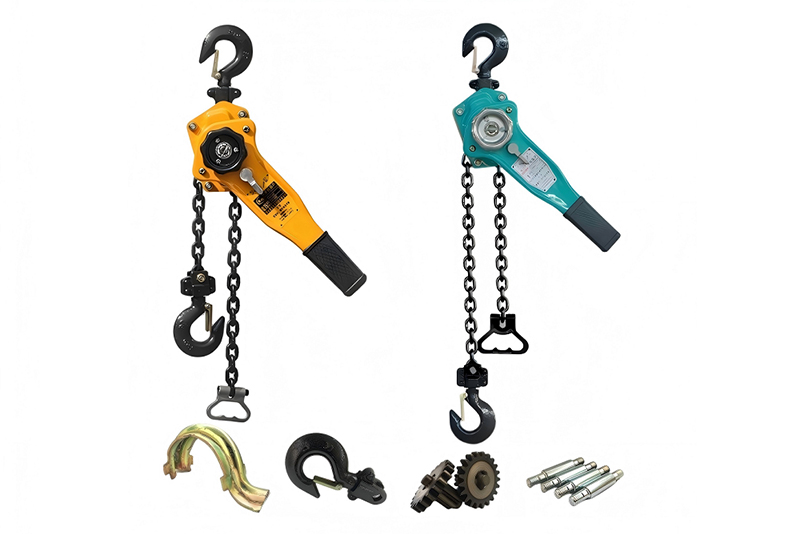
In demanding industrial environments—from construction sites to shipyards—having the right lifting equipment isn't just about efficiency; it’s about safety. Lever hoists, often called "come-a-longs," are essential tools for lifting, pulling, and tensioning heavy loads. However, not all hoists are created equal.
Expert Tip: Many industry professionals recommend a "safety buffer"—choosing a hoist rated for 25% to 50% more than your maximum load to prevent equipment strain and enhance longevity.
Remember to include the weight of any rigging hardware (slings, shackles) in your total calculation.
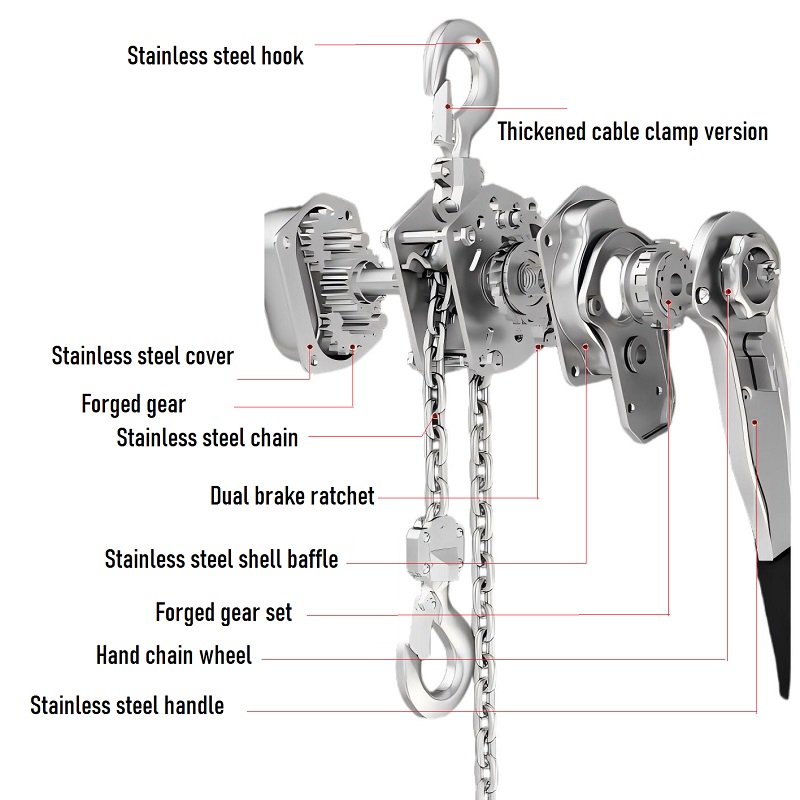
Chain Material: Ensure the load chain is heat-treated and corrosion-resistant, especially for outdoor or humid environments.
Housing: A rugged, impact-resistant gear housing protects internal mechanisms from the rough handling common in industrial settings.
Reliable Braking System: Look for a dual-pawl Weston-style brake system that provides immediate and secure load holding.
Overload Protection: Some premium models feature a "slip clutch" or load limiter that prevents the hoist from lifting weights significantly beyond its rated capacity.
Safety Latches: Heavy-duty forged hooks should always be equipped with spring-loaded safety latches to prevent accidental disengagement.
Handle Length: Longer handles provide better mechanical advantage, making it easier to lift heavy loads with less manual effort.
Free-Wheeling Mechanism: This allows for quick take-up of slack chain when the hoist is not under load, significantly speeding up setup times.
To ensure you select the best lever hoist for heavy-duty applications, consider these critical factors before making your investment.
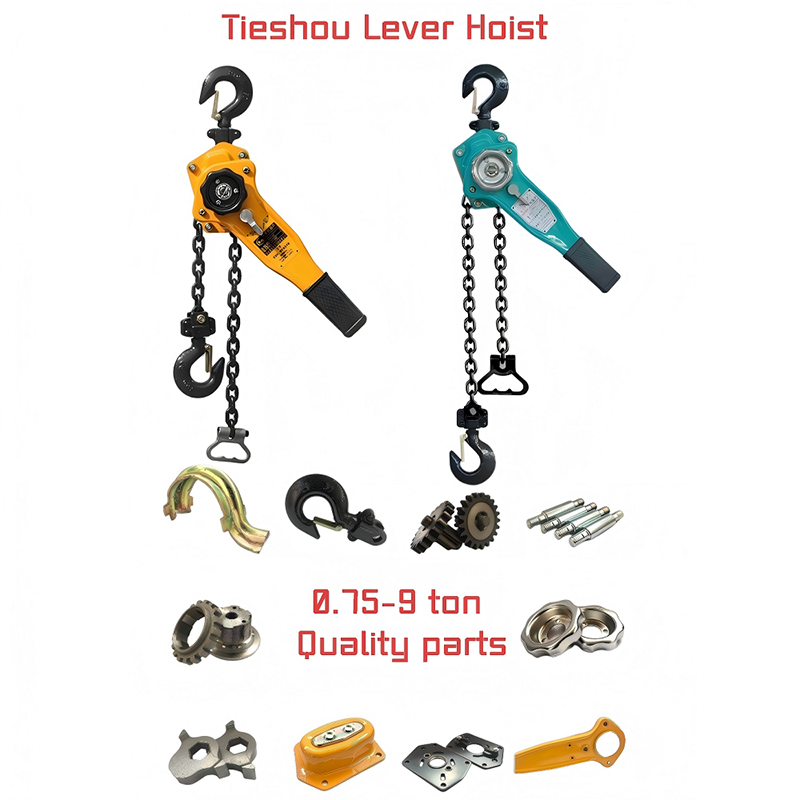
1. Calculate Load Capacity with a Safety Margin
The most vital specification is the Working Load Limit (WLL). Always select a hoist with a capacity that exceeds your heaviest anticipated load.Expert Tip: Many industry professionals recommend a "safety buffer"—choosing a hoist rated for 25% to 50% more than your maximum load to prevent equipment strain and enhance longevity.
Remember to include the weight of any rigging hardware (slings, shackles) in your total calculation.
2. Evaluate Build Quality and Durability
For heavy-duty work, durability is non-negotiable. Look for hoists constructed from high-grade alloy steel rather than standard metals.Chain Material: Ensure the load chain is heat-treated and corrosion-resistant, especially for outdoor or humid environments.
Housing: A rugged, impact-resistant gear housing protects internal mechanisms from the rough handling common in industrial settings.
3. Prioritize Safety Features
Safety is the primary concern in any lifting operation. A high-quality lever hoist should include:Reliable Braking System: Look for a dual-pawl Weston-style brake system that provides immediate and secure load holding.
Overload Protection: Some premium models feature a "slip clutch" or load limiter that prevents the hoist from lifting weights significantly beyond its rated capacity.
Safety Latches: Heavy-duty forged hooks should always be equipped with spring-loaded safety latches to prevent accidental disengagement.
4. Consider Operational Ergonomics
In high-frequency use cases, the design of the lever handle matters.Handle Length: Longer handles provide better mechanical advantage, making it easier to lift heavy loads with less manual effort.
Free-Wheeling Mechanism: This allows for quick take-up of slack chain when the hoist is not under load, significantly speeding up setup times.
5. Check Certifications and Standards
Ensure your equipment meets international safety standards such as ASME B30.16, ISO, or CE. Buying from a reputable manufacturer that provides test certifications and offers readily available replacement parts is crucial for long-term maintenance and compliance.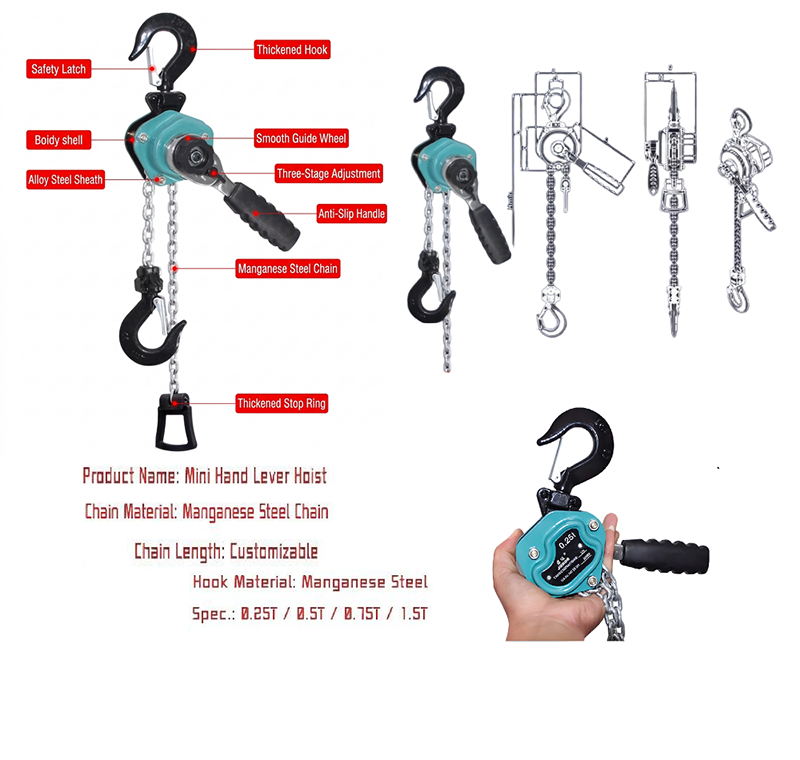


 sales@tieshouqizhong.com
 +8615132261111
 Alice Zhang
 Kang Wang
 Joyce Yang
 Home
Home WhatsApp
 Email
Email